
Three planners.
One subscription.
Everything an astrophotographer needs to plan Milky Way sessions, moon shoots, and multi-stop trips — for less than a coffee per month.
Milky Way Planner
Plan perfect nights for capturing the galactic core with precision timing and visibility data.
- ✦Galactic core rise & set times with compass directions
- ✦Monthly visibility calendar with 1–10 ratings
- ✦Best nights analysis for optimal shooting
- ✦Dark sky window calculations
- ✦Astronomical twilight tracking
- ✦Export to Excel, CSV, or Calendar
Moon Planner
Track lunar cycles, supermoons, and perfect timing for dramatic moon photography.
- ✦Moon rise & set times with directional data
- ✦Supermoon tracking throughout the year
- ✦Golden hour & blue hour overlap detection
- ✦Best full moons recommended monthly
- ✦Phase tracking with illumination percentages
- ✦Export to Excel, CSV, or Calendar
Trip Planner
Build multi-stop photography itineraries with date-specific visibility for each location.
- ✦Multi-stop itinerary building
- ✦Date-specific visibility for each stop
- ✦Add locations from favorites or custom search
- ✦Vertical timeline view for trip overview
- ✦Full trip export to calendar or spreadsheet
- ✦Plan weeks or months of travel in one view
What you'll actually use
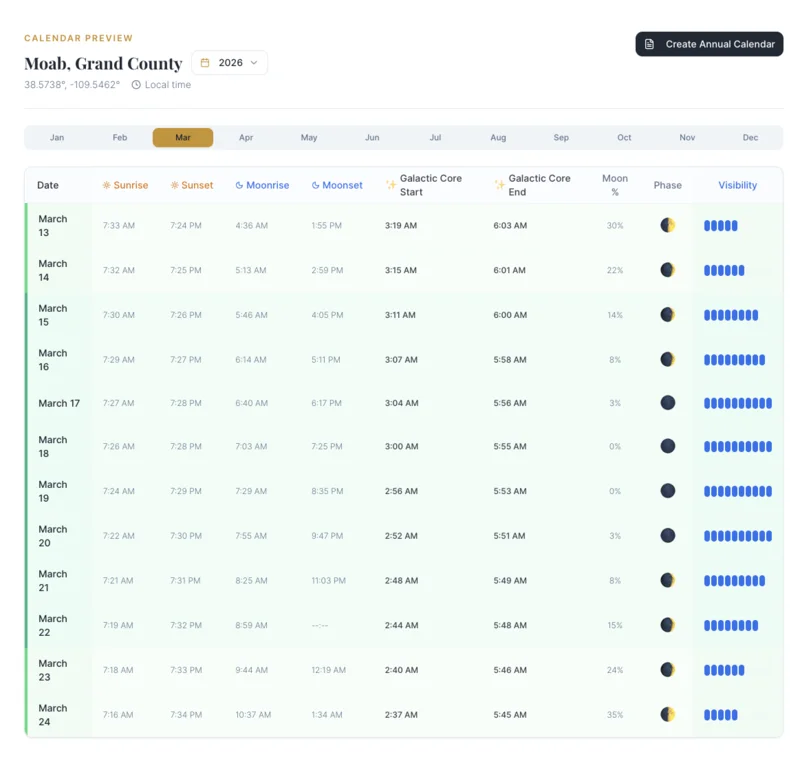
Milky Way Calendar
Every night rated 0–10 for your exact location. Galactic core rise and set times, moon phase percentage, and dark sky windows — all in one view.
- ✦ Nightly visibility ratings
- ✦ Galactic core timing
- ✦ Export to PDF, Excel, or ICS
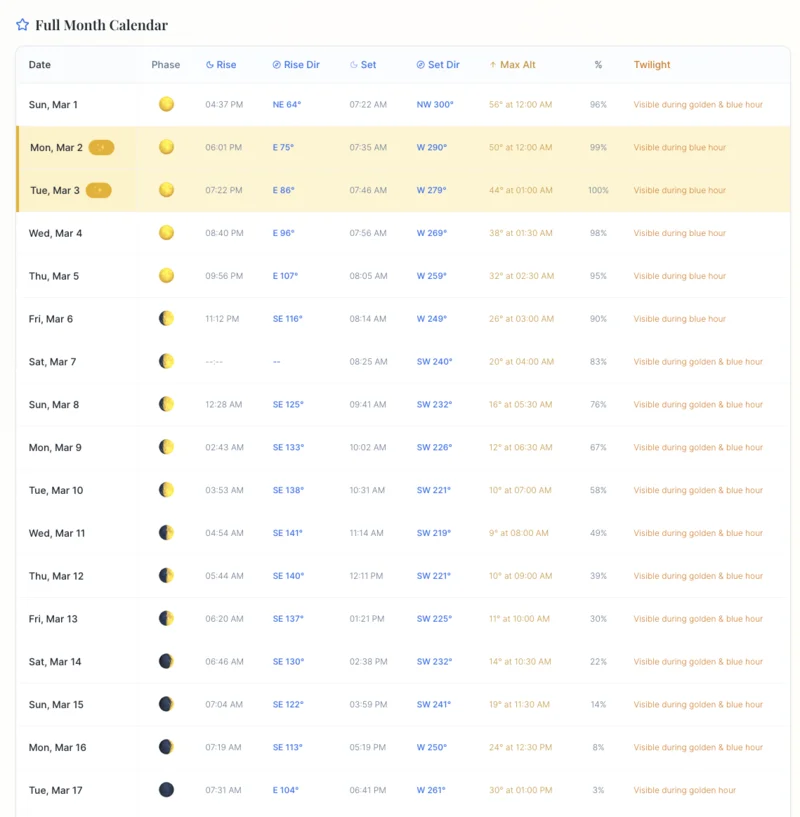
Moon Planner
Moonrise and moonset with compass directions, supermoon dates, and golden hour overlaps. Plan dramatic lunar compositions with precision.
- ✦ Compass direction for rise/set
- ✦ Supermoon tracking
- ✦ Golden & blue hour overlap
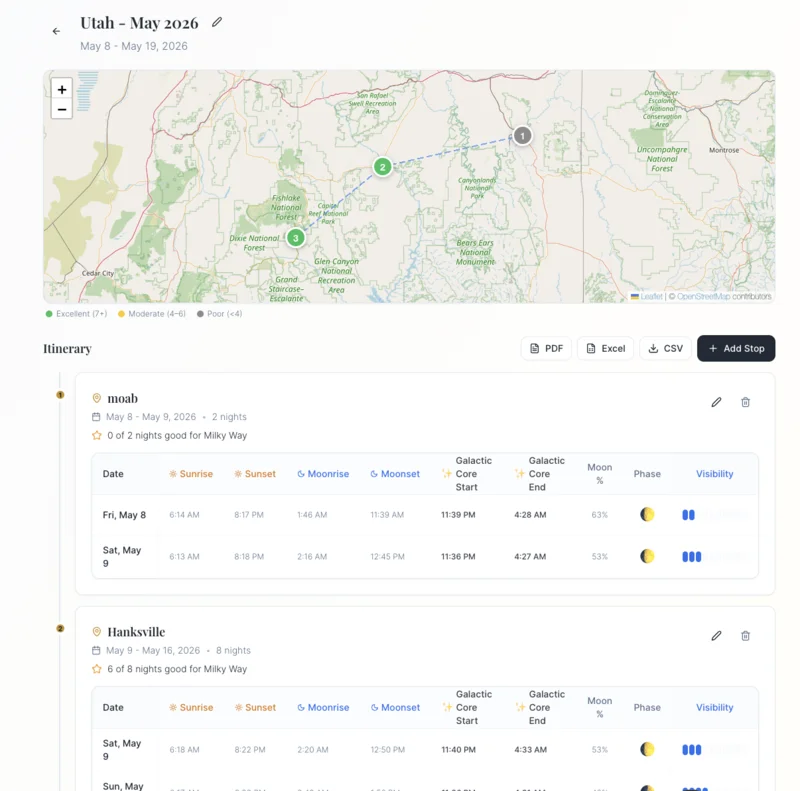
Trip Planner
Build multi-stop photography itineraries with a map view and date-specific visibility for each location along the way.
- ✦ Multi-stop itineraries
- ✦ Map view with all stops
- ✦ Export full trip to calendar
Unlimited saved locations
Excel, CSV & ICS exports
1–10 visibility ratings
Precise rise/set timing
Astrophotography Workshops
Browse workshops at dark sky locations worldwide. Learn from experienced photographers with hands-on instruction in the field.
Browse WorkshopsWorkshop Leaders
List your workshops where photographers are planning their shoots. $200/year for unlimited listings, and your subscription includes all Premium features.
Premium access included with Workshop Leader subscription
List Your WorkshopStart planning better nights
All three planners, unlimited locations, and full exports — one annual price.
One-time annual payment. Cancel anytime.