
Tips, Guides & Planning
Practical advice for astrophotographers — from planning your first Milky Way shoot to advanced techniques.
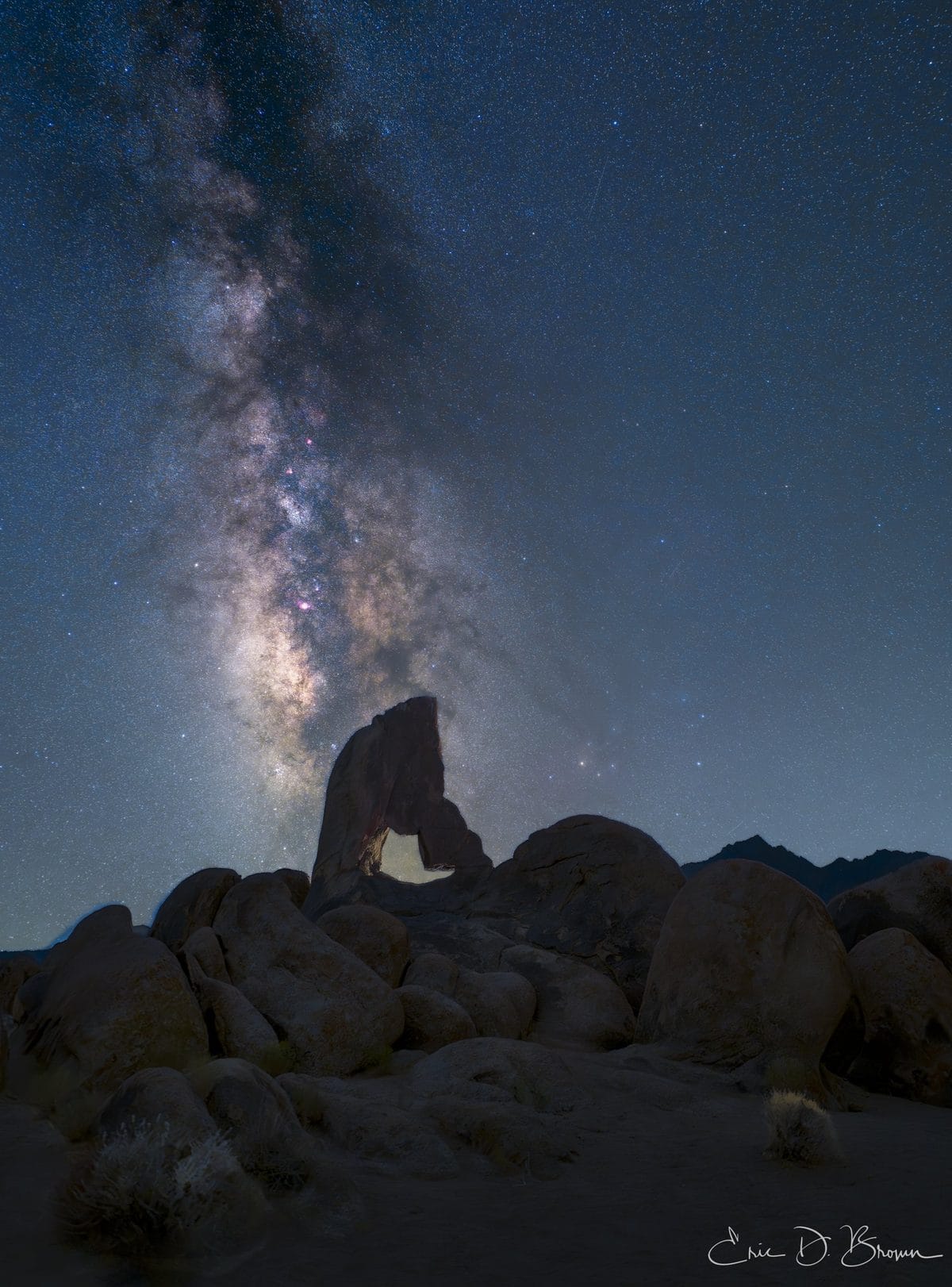
Best Time to Photograph the Milky Way (by Hemisphere and Latitude)
Milky Way season runs on hemisphere and latitude windows. See Northern and Southern ranges, why summer can fail at your latitude, and how to pick rated nights.
Read articleNever Miss a Post
Get notified when we publish new guides, tips, and astrophotography inspiration.
No spam, ever. Unsubscribe anytime.
More Articles
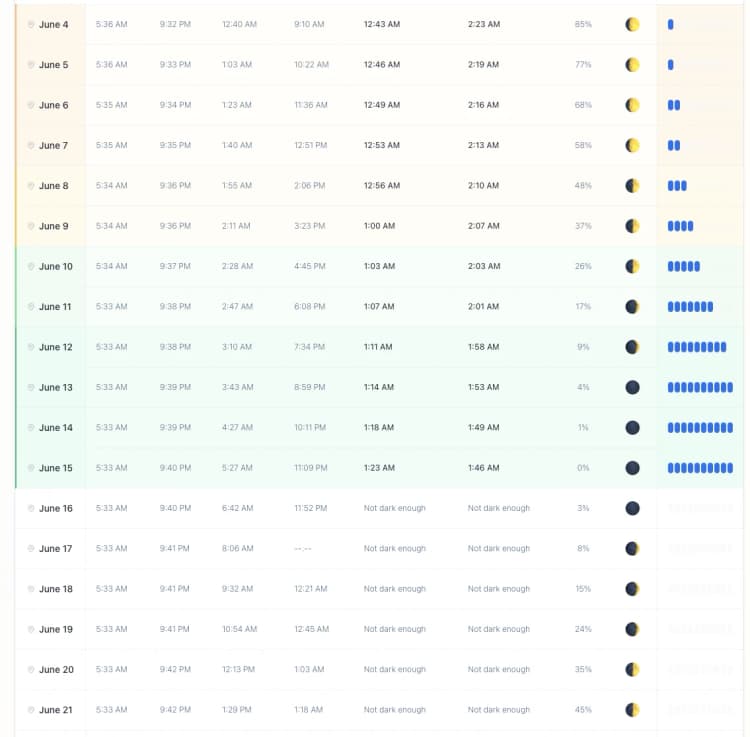
Milky Way Photography in June: Why Your Latitude Decides the Window
June is peak Milky Way season, but short summer nights shrink your shooting window, and your latitude decides by how much. When to shoot in June 2026, with real data.
6 min read
Finding the Location Is the Easy Part
Milky Way Planner tells you when and where to shoot. It doesn't tell you if you can get there. Here's how I use Trails Offroad to solve the second half of the planning problem.
5 min read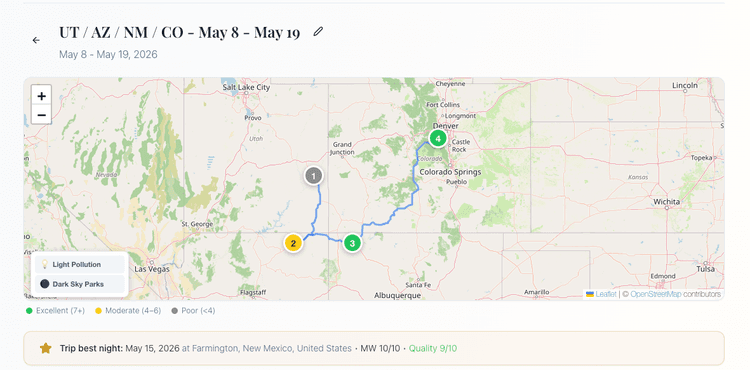
Planning a 12-Day Photography Trip in Milky Way Planner
A real walkthrough of planning a 12-day Milky Way photography trip across Utah, Arizona, and New Mexico using the Milky Way Planner premium trip planner. Four stops, eleven nights, all in dark skies.
6 min read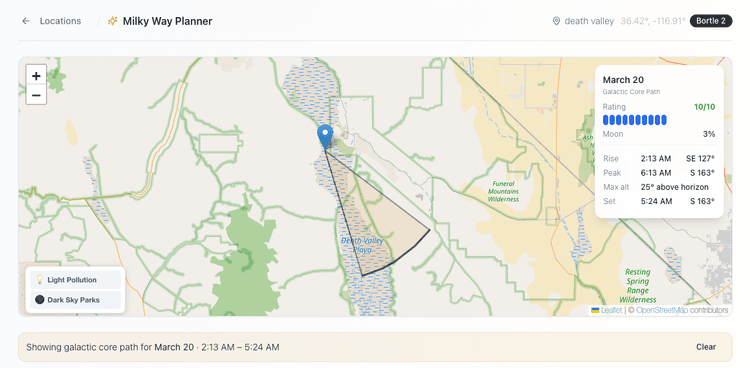
How to Plan the Full Milky Way Arch Shot
The full Milky Way arch from horizon to horizon is a narrow planning target. Here's the timing, latitude, and location requirements that make it work.
6 min read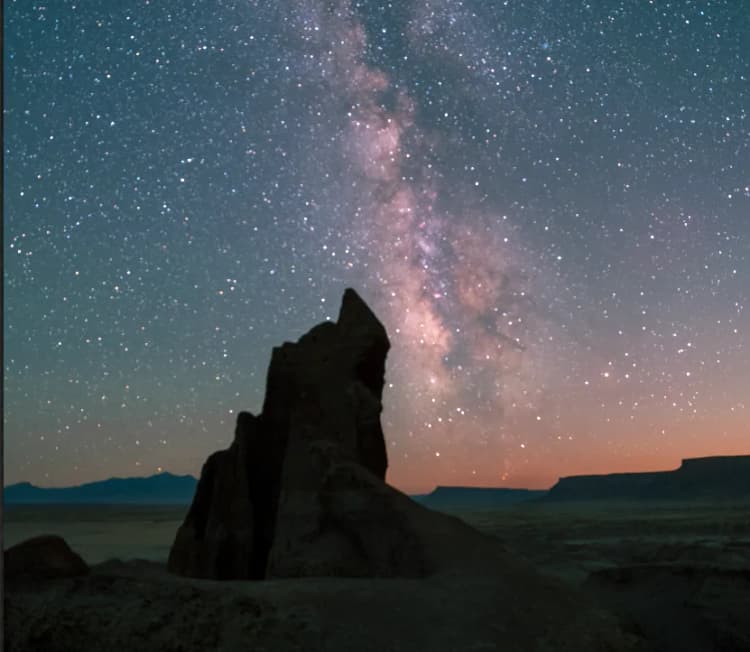
Milky Way Focus Techniques: How to Get Sharp Stars Every Time
Soft stars are the single most common reason Milky Way shots fail. Here's how to choose the right focus technique for what you're shooting, and how to build it into your planning.
6 min read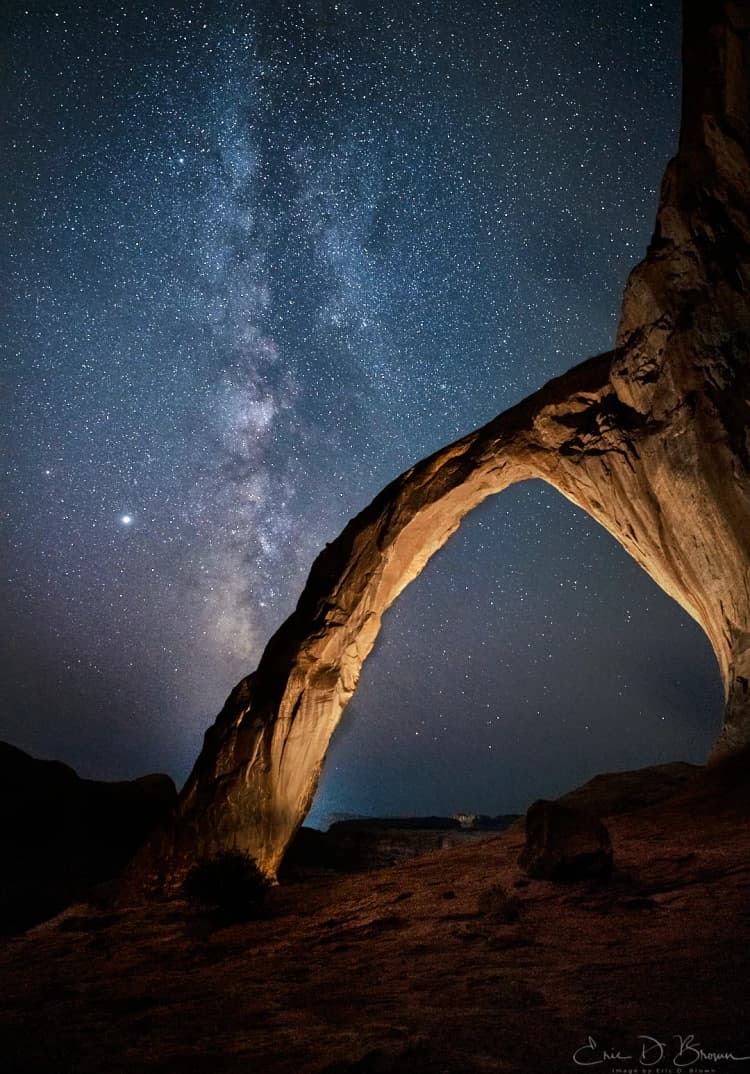
How I Plan a 3-Day Astrophotography Trip (A Moab Example)
Moon phase first. Galactic core timing second. Foreground third. Weather last, because weather doesn't negotiate. A full walkthrough of how I'd plan a 3-day astrophotography trip to Moab in May.
7 min read
2026 Lyrids Meteor Shower: How to Plan and Photograph It
The 2026 Lyrids peak April 22 with a favorable crescent moon window. Here's how to plan your location, timing, and camera settings to photograph one of the oldest meteor showers in the sky.
4 min read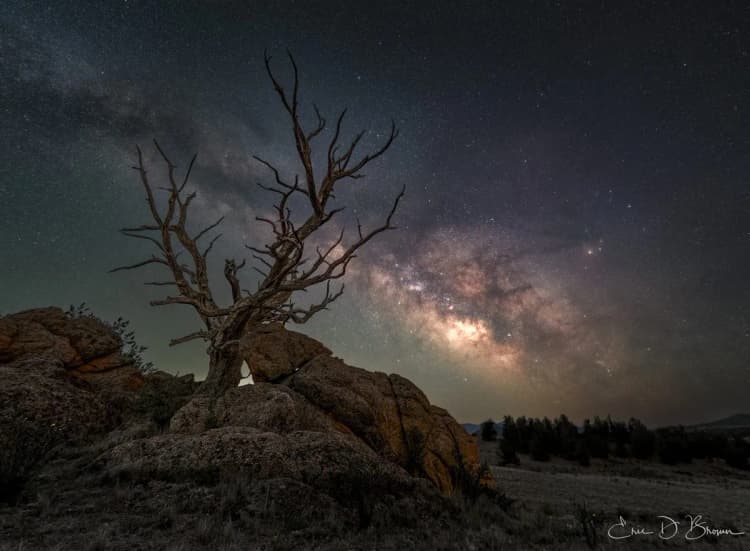
Scout Now, Shoot Later: Location Planning Before Milky Way Season
The photographers who get great Milky Way shots plan in two phases. Here's how to use Milky Way Planner to find your windows, and what to do with that information before you ever show up at night.
6 min read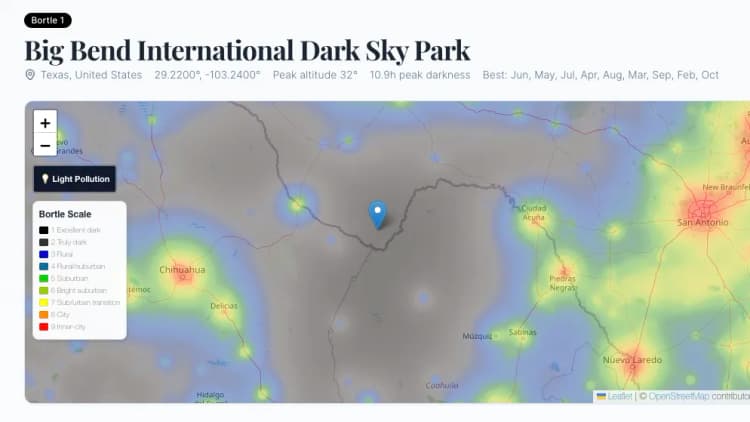
New: Dark Sky Location Maps, Light Pollution Overlay, and Galactic Core Arc
Milky Way Planner now shows light pollution data directly on every map, 400+ dark sky locations with individual planning pages, and a galactic core arc showing exactly where the Milky Way will appear in the sky.
5 min readShowing 9 of 26